There are outings you plan, and outings you decide on at seven in the evening while picking up the car keys. Cabris belongs firmly to the second kind. The village sits so close to the house that we drive up almost without thinking about it, usually just as the light starts to soften over the hills. It has become our favourite end-of-day habit: dinner on a terrace up there, then a slow walk through the lanes while the sky turns from pink to deep blue.
A medieval village, and what is left of it
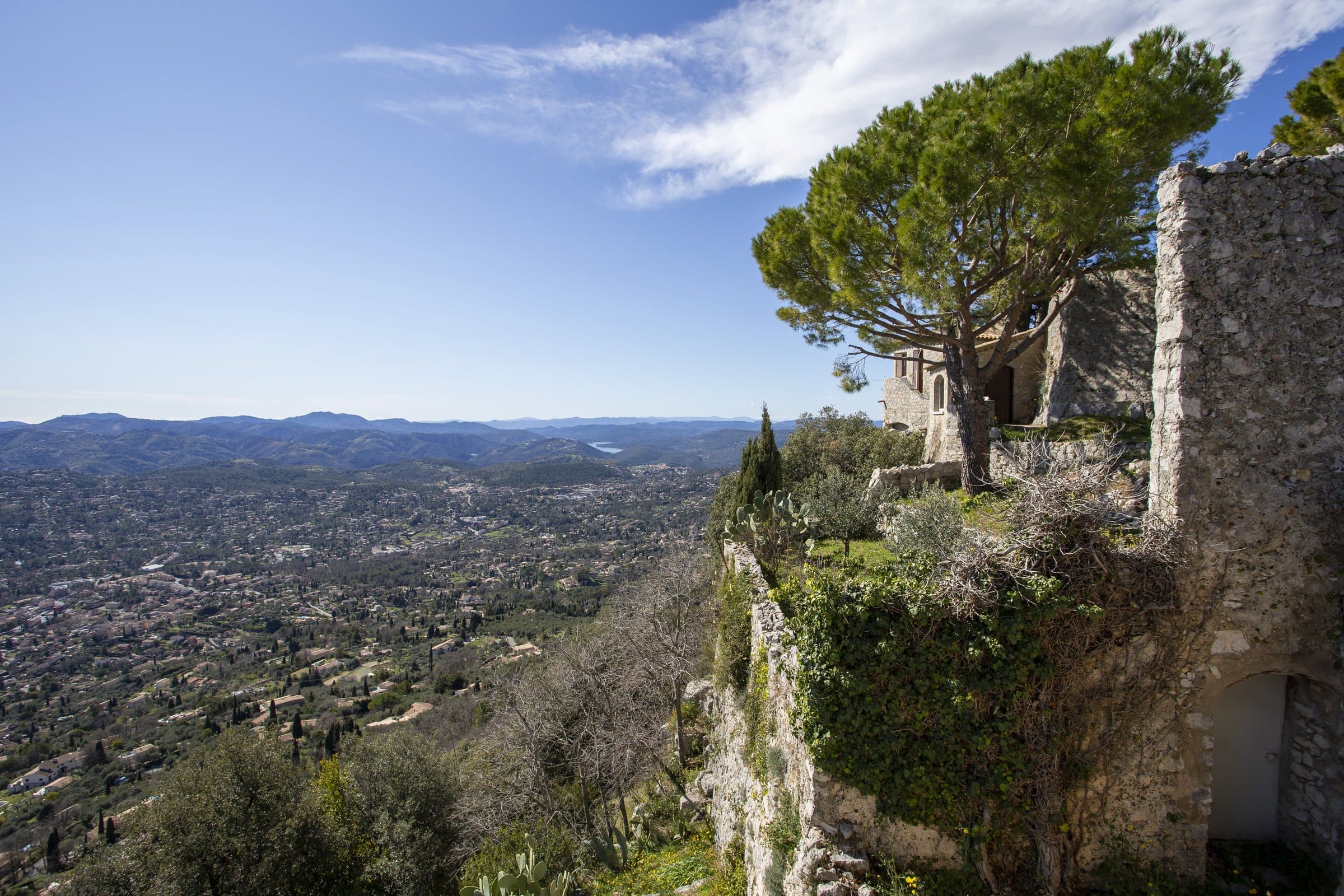
Cabris lies about six kilometres west of Grasse, clinging to the edge of the plateau. Its name comes from the Latin capra, goat, which tells you something about the gradient. The village is medieval and feels it: narrow lanes where two people pass each other with care, houses pressed shoulder to shoulder, stairways climbing towards the top of the old town, fountains tucked into the corners of small squares. At the very top stand the ruins of the feudal castle, dismantled during the Revolution. Only sections of wall and a fragment of the ramparts remain, open to the drop below. It is a few minutes on foot from the centre, and it is where everyone ends up sooner or later.
What you see from up there
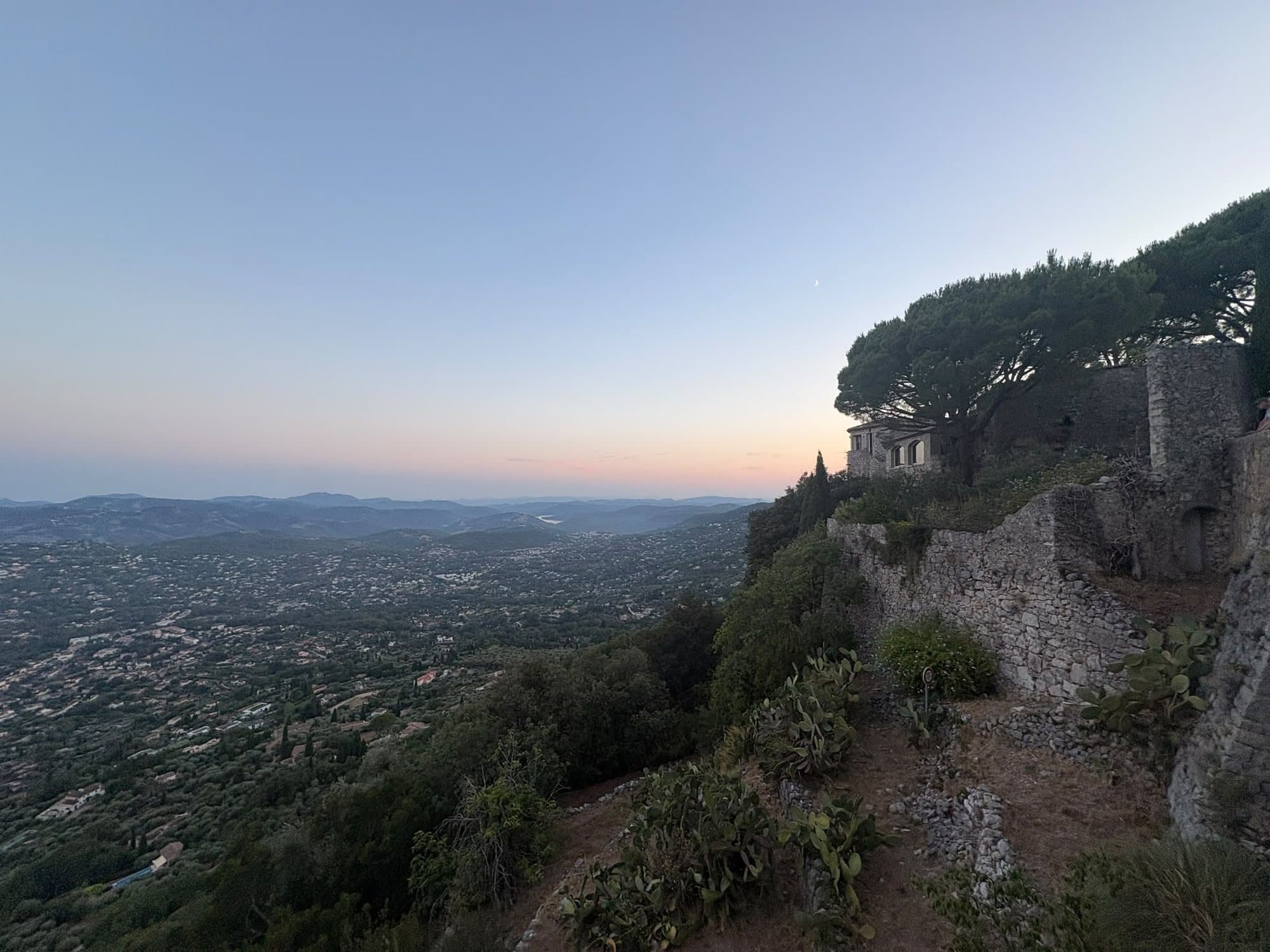
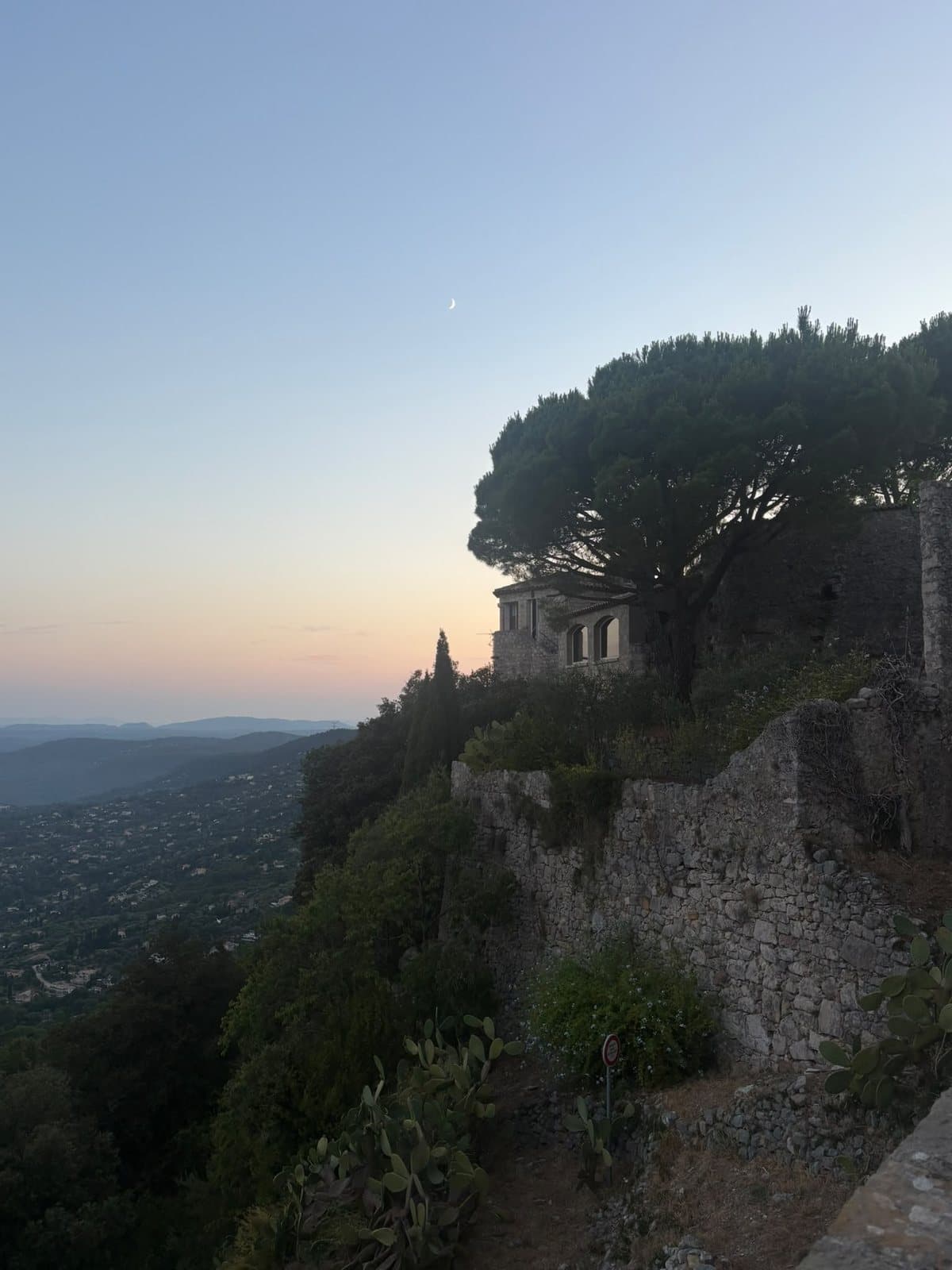
The esplanade beside the ruins opens onto a view that still catches us out after twenty visits. Below, to the west, Lac de Saint-Cassien spreads its flat surface between wooded hills. On a clear day you can follow the land all the way to the bay of Cannes and the line of the sea, with the red mass of the Estérel closing the horizon. The rest is tiled roofs, small valleys and the occasional umbrella pine cut out against the sky. The best moment is the one just before nightfall, when the lake turns to silver and the moon comes up over the trees.
Where we like to eat
These are not guidebook picks, just the tables we use ourselves when we drive up to Cabris. In a village this size everything happens on foot: you park once, and you don't touch the car again until it is time to go home.
La Chèvre d'Or, on place du Puits, is one of our favourites. Carefully worked cooking, a dining room and terrace on a human scale, the sort of place where you stay longer than you meant to.
Le Petit Prince, on rue Frédéric Mistral, is more relaxed, closer to a bistro, and does the job very well indeed. The name is not a tourist wink: Countess Marie de Saint-Exupéry, mother of Antoine de Saint-Exupéry, the author of the famous book The Little Prince, lived in Cabris from 1938 until her death in 1972, and the village has not forgotten her (there is even a small place Saint-Exupéry).
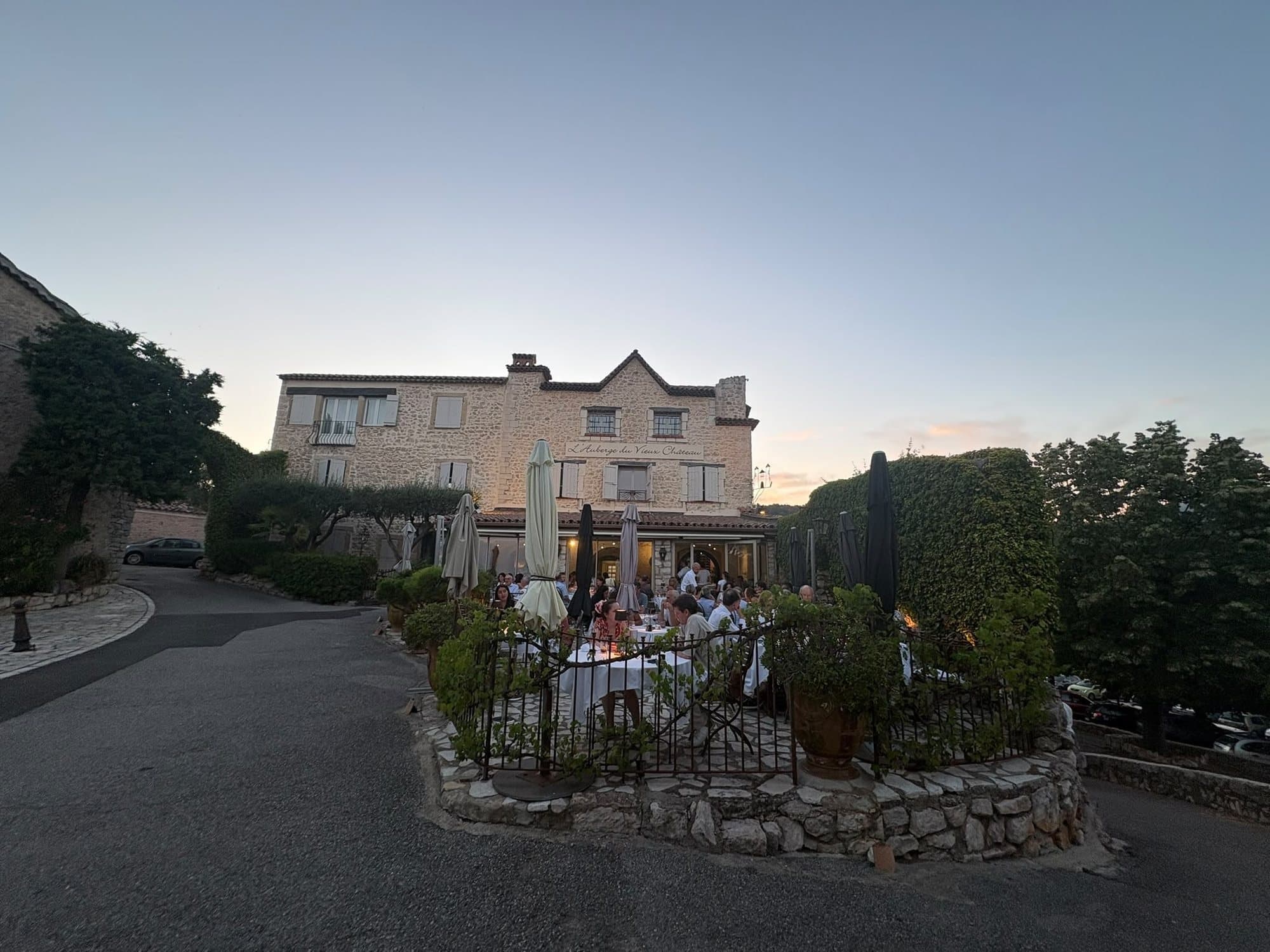
L'Auberge du Vieux Château, on place Mirabeau, is another safe bet, with a panoramic terrace that settles the question of which table to ask for.
None of the three is large. In summer, book ahead: it would be a shame to drive up to Cabris and have to come back down for dinner.
Evening
Dinner, then a walk
The sequence is always the same for us: a table outside while the day goes down, then a slow loop through the old village with no particular destination. The lanes empty out, the façades hold the warmth of the afternoon, and you head back to the car with a crescent moon above the roofs.
Getting there from the villa
Allow about ten minutes by car from Grasse, due west, on a road that climbs gently through the hills. Park at the entrance to the village, since the centre is walked rather than driven. Leaving in the late afternoon gives you time for a first climb up to the ruins before dinner, which is the best way to open the evening. Anyone who prefers full daylight will find different colours, longer views, and far fewer people than in Grasse itself.
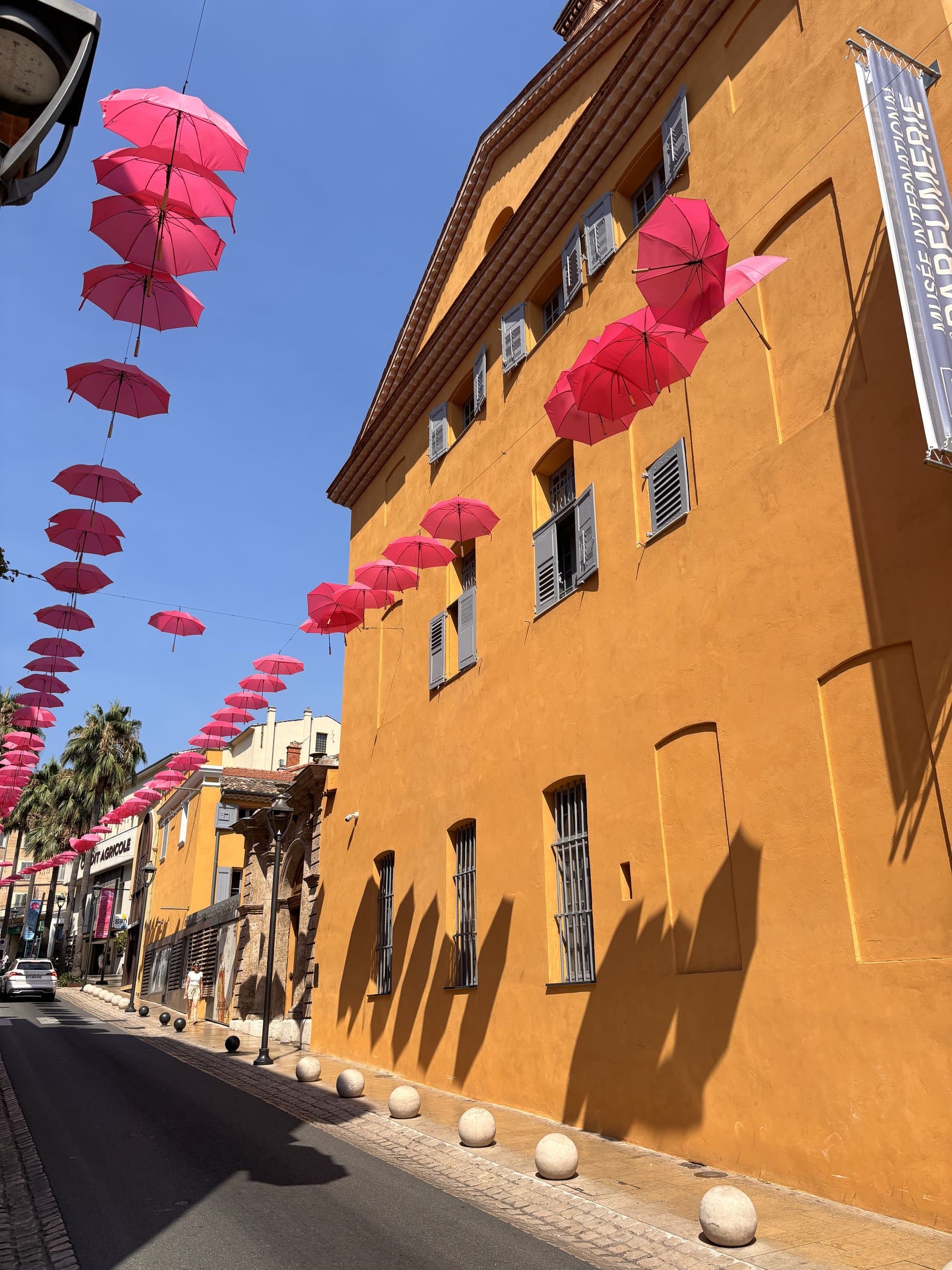
It pairs easily with a day spent in town: the great perfume houses or the International Perfume Museum in the morning, then Cabris once the light starts to go. More ideas for outings from the house are gathered in the Discover section.
FAQ
How far is Cabris from Grasse?
Cabris is about six kilometres west of Grasse, roughly ten minutes by car from the town centre and from Villa Apolline. The road climbs gently through the hills.
Where should I eat in Cabris?
Three tables we use ourselves: La Chèvre d'Or (place du Puits), Le Petit Prince (rue Frédéric Mistral), which is more of a bistro, and l'Auberge du Vieux Château (place Mirabeau) with its panoramic terrace. Book ahead in summer.
What is there to see in Cabris?
The ruins of the feudal castle and their panoramic esplanade, looking out over Lac de Saint-Cassien and the bay of Cannes, plus the lanes and squares of the old village, which take about an hour to walk.